Pet apparel · GUIDE
What to Include in a Pet Apparel Customization Brief
Start with a specific garment, the sizes and quantities you want to explore, and a clear list of changes you are asking about. Separate packaging requests from changes to the clothing itself, then ask the supplier to confirm what is possible for the chosen style.
A useful brief does not need to be a finished technical drawing. It does need to show which details are decided and which still need discussion. This guide helps pet brands and retailers prepare a practical first inquiry for custom pet apparel.
In this guide
Start with the garment and its intended use
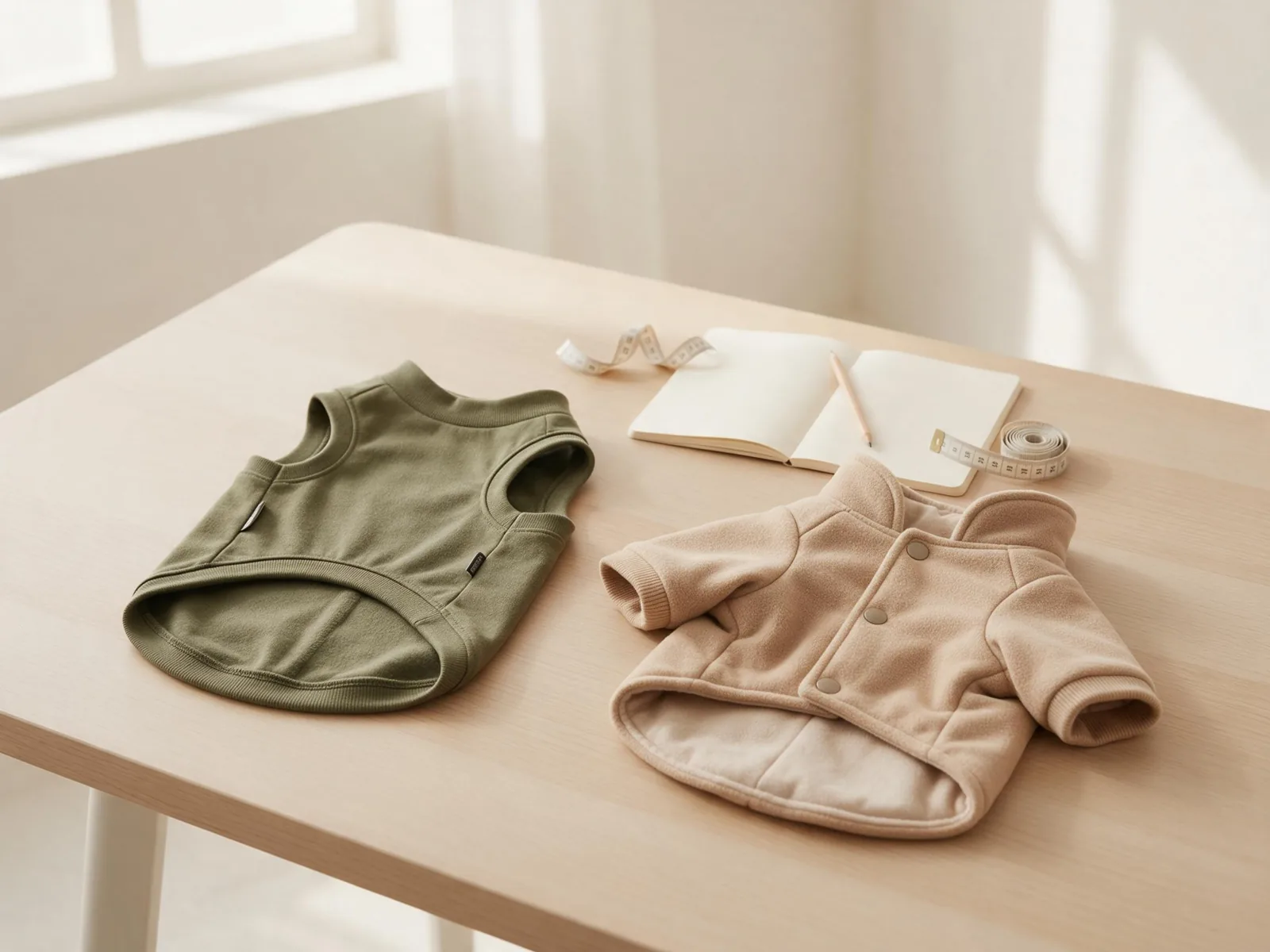
Identify the reference style and describe what you want the wearer to do in it. A product link, style reference or front-and-back image helps the supplier understand your starting point. Add the intended animal, the expected season or setting, and the features you consider essential.
For example, a buyer might ask about a sleeveless vest for a small-dog collection and specify an easy-to-check opening and a preferred length. That is a proposed brief, not a description of an existing Mew & Paw product or an assurance that changes are available.
List your priorities in two columns: requirements that must be met and preferences you are willing to discuss. If the style is already in a catalog, point out exactly what you want to keep. A request to “make it like the photo” can leave the closure, coverage and intended fit open to interpretation.
Explain the size chart and fit you need
Send measurements with their units and say whether the numbers describe the animal or a finished garment. A chest circumference, a flat garment width and a recommended pet weight are different kinds of information. Ask the supplier how each measurement is taken and whether the chart includes wearing room.
The American Kennel Club’s measuring guide discusses chest, back and neck measurements and notes that sizing can differ between products. Our dog clothing measurement guide explains where to measure and what to ask when a chart’s meaning is unclear.
For a collection, include the intended size range, the body measurements you expect to cover and any garment measurements you already have. Ask about points of measurement, tolerance, closure placement and how the fit can be reviewed for the chosen style. Do not assume that a size label from one product carries across to another.
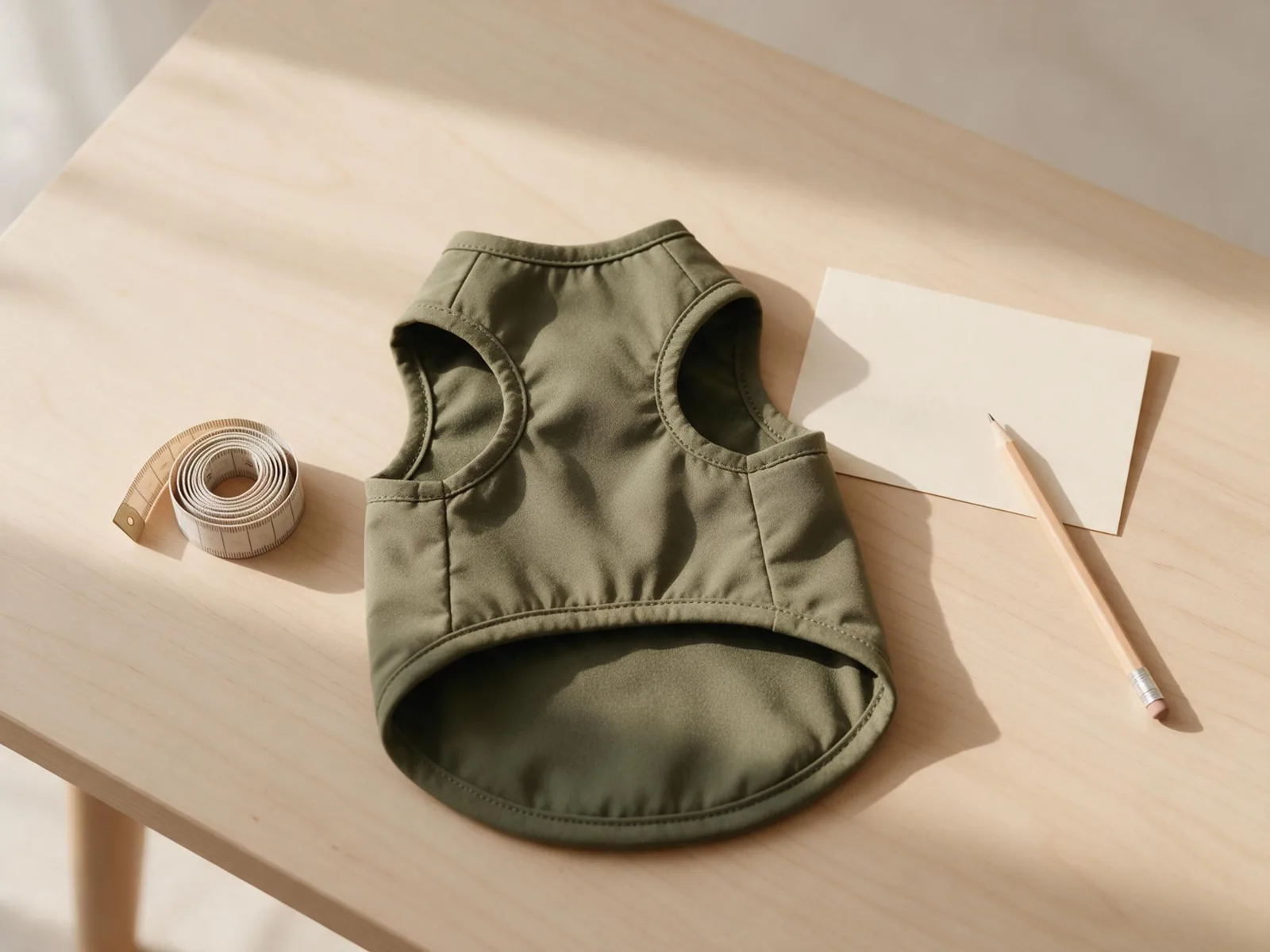
Write down how each size measurement is defined.
Show quantities by style, size and color
Give a planned breakdown even when your final order is not yet decided. A total quantity alone does not show whether you need one size in one color or a mix across a range. A small table or spreadsheet makes the question clearer:
| Style reference | Color | Size | Planned quantity | Status |
|---|---|---|---|---|
| Your selected style | Your preferred color | Your size | Your estimate | Confirm availability |
| Your selected style | Another requested color | Your size | Your estimate | Confirm availability |
Use your own figures in the table; these rows are a template, not available stock. Ask whether sizes and colors can be combined, whether the requested mix is available, and which quantities apply separately to the garment, packaging or other requested components. Minimums and availability must be confirmed for the specific project.
Separate packaging from garment changes
Name the exact item and where the branding or information should appear. A printed insert inside a package, a label applied to packaging and a sewn garment label are different requests. Treat them separately rather than writing “private label everything.”
| Request | What to provide | What to confirm |
|---|---|---|
| Packaging or insert | Artwork, language, intended placement and quantity | Available options, artwork format and applicable quantities |
| Label on the garment | Proposed content, position and attachment | Whether the selected style can be changed and what a sample would show |
| Fabric, color or construction change | The reference style and the proposed change | Feasibility, material details, sampling and project terms |
Mew & Paw’s custom apparel page describes packaging and insert options that can be discussed. Changes to garment labels or the clothing itself are assessed separately for the selected style. Mention each request explicitly so the response can address the right item.
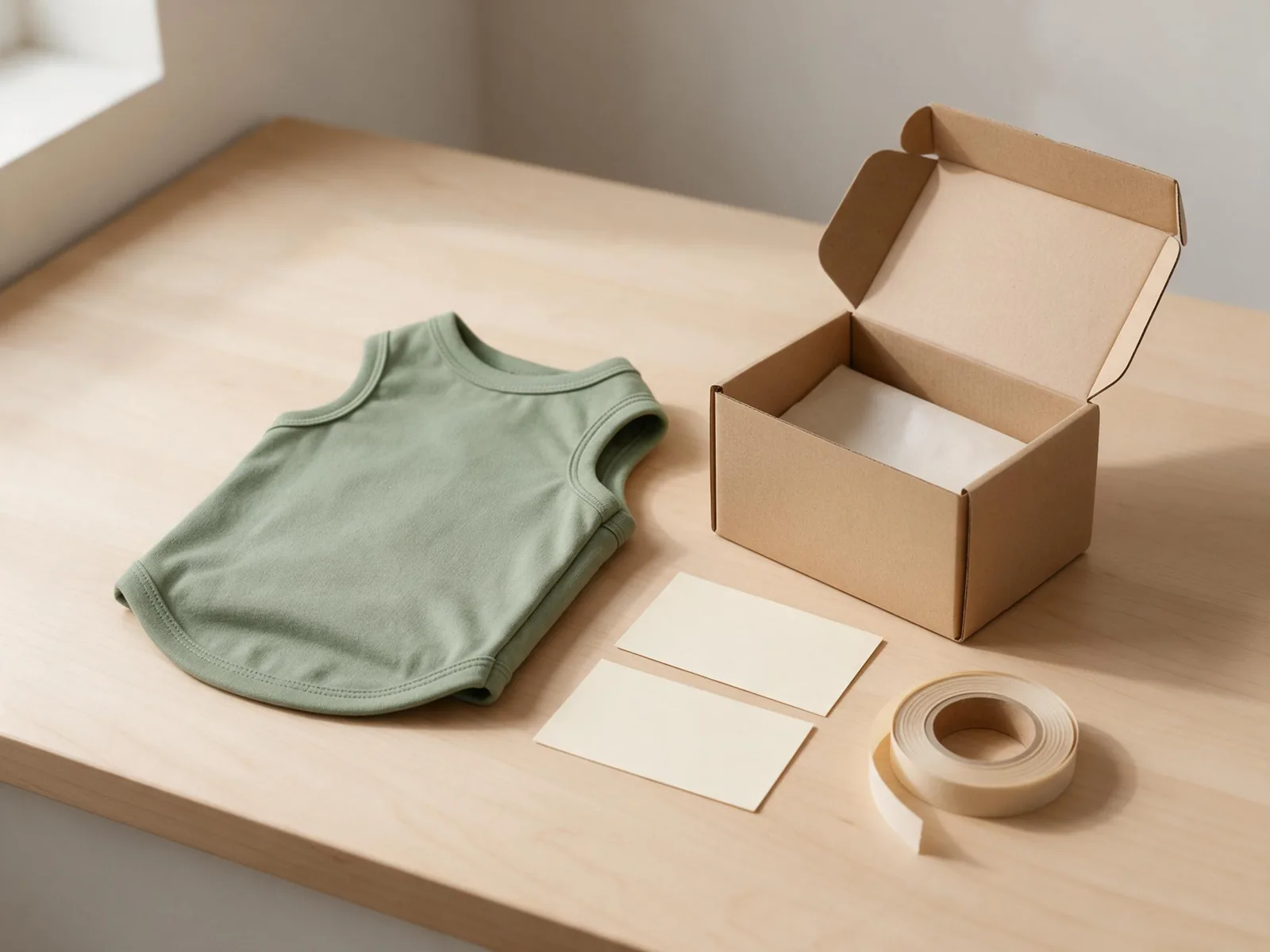
Describe packaging and garment requests separately.
Identify the market and documentation questions
Tell the supplier where the collection will be sold and list the documentation or label information you need to verify. Your destination, sales channel and product description help frame a more useful discussion. Ask for material details, care information and any relevant documentation for the specific garment and market.
For products covered by its rules, the U.S. Federal Trade Commission’s textile labeling guide discusses fiber content, origin and the responsible business. Do not assume that every provision applies to a particular pet garment: check the product’s classification, applicable rules and any exemptions for the destination market with a qualified adviser or the relevant authority.
A certificate name alone does not establish that every product or material is covered. Ask which item, model or material a document identifies, and review its scope and validity for your intended use. Avoid publishing a compliance claim until its applicability has been checked.
Ask how samples and approval will work
Discuss what a sample can verify before treating the specification as final. Ask whether a sample is available for the selected style and requested changes, what it will represent, and how you should communicate any revisions. Sample availability and terms need confirmation for your project.
Use a simple review list: Does the garment match the agreed style and color? Are the size and measurement method clear? Are the openings, placement and requested packaging consistent with the brief? Record observations separately from promises about future production.
If fit is evaluated on a dog, keep the animal comfortable and stop if it appears distressed. A sample can help identify questions, but one sample or one dog does not establish a universal fit or replace any required product assessment.
A pet apparel brief you can copy
Send the items below together so the supplier can identify what is settled and what still needs a reply.
Reference style: Link, name or front-and-back images.
Intended wearer and use: Animal, setting, season and desired coverage.
Size information: Size range, chest/back/neck points, units and whether figures describe the body or garment.
Planned order mix: Estimated quantities by style, color and size.
Packaging and inserts: Requested components, artwork and placement.
Garment changes: Label, color, material or construction changes to assess separately.
Destination market: Country or region and any documentation questions.
Review questions: Samples, measurement method and tolerance, available options, minimums and timing.
Mark each line as confirmed, preferred or still to be discussed. If you do not have a detail yet, say so and ask what the supplier needs. Keep artwork versions and measurement notes together so later replies refer to the same request.
Frequently asked questions
Do I need a complete tech pack for a first inquiry?
Not necessarily. Start with a reference style, your intended use, the size information you have and specific questions. A more detailed specification may be needed before particular changes or an order can be assessed.
Is packaging customization the same as changing a garment label?
No. They involve different items and may require different artwork, quantities and processes. Ask about the packaging and the garment separately for your selected style.
Can I mix sizes and colors in one project?
You can describe the mix you want. The supplier must confirm availability and any applicable conditions for the selected style and requested options.
What if I only have a pet-weight guide?
Share it as a starting reference, and request the relevant body or garment measurements and the measurement method. Weight on its own does not describe every animal’s proportions.
Discuss your collection
Browse the pet apparel catalog and explore custom pet apparel. Bring your reference style and brief to the inquiry form so sizes, packaging requests and other project details can be discussed for the selected garment.
Continue planning: review raincoat performance questions and compare dog coat styles.
Compare opening designs in our dog jacket closures guide.
Preparing specifications? Read our dog clothing tech pack guide.