Pet apparel · GUIDE
Dog Raincoat Buying Guide: Waterproof vs Water-Resistant
A waterproof or water-resistant label is a starting point, not a complete product specification. For each dog raincoat you are considering, ask what was tested, which result was obtained, and whether that result applies to the fabric alone or the finished garment. Then compare coverage, openings and the style’s own size chart with the use you have in mind.
For a brand or retailer, put those questions in writing before settling on a product description. The Mew & Paw pet apparel catalog includes rainwear styles; the performance and available details for any selected style need individual confirmation.
In this guide
What do the two terms mean to a buyer?
Water-resistant generally indicates that a material is intended to resist water penetration to some extent. Waterproof usually signals a stronger barrier claim. Neither word, by itself, tells you the test method, the sample, the measured result or the conditions a finished dog coat will withstand. Ask the seller to explain the claim instead of translating the label into a promised number of minutes in the rain.
The REI guide to rainwear construction and testing explains that coatings, membranes and surface water-repellent finishes have different functions. It also notes that brands do not necessarily use the same threshold for a waterproof claim. Its discussion concerns human outdoor clothing; use it to understand questions to ask, not to assign a rating to a particular pet garment.
Ask for the evidence behind a claim
Request the method name and version, the result and units, the date, and the item or material that was tested. Match the report to the same fabric, color, construction and supplier reference you are buying. If the report describes only a fabric swatch, it does not establish the performance of the seams, openings or finished coat.
Ask whether testing was performed before or after care or wear, and what the result can support in your intended market. A numerical result is useful only with its method and context; a fabric test result should not be presented as a guarantee for the whole garment. If a report is unavailable, describe the feature accurately as unverified and avoid inventing a rating.
Check the whole garment, not only the fabric
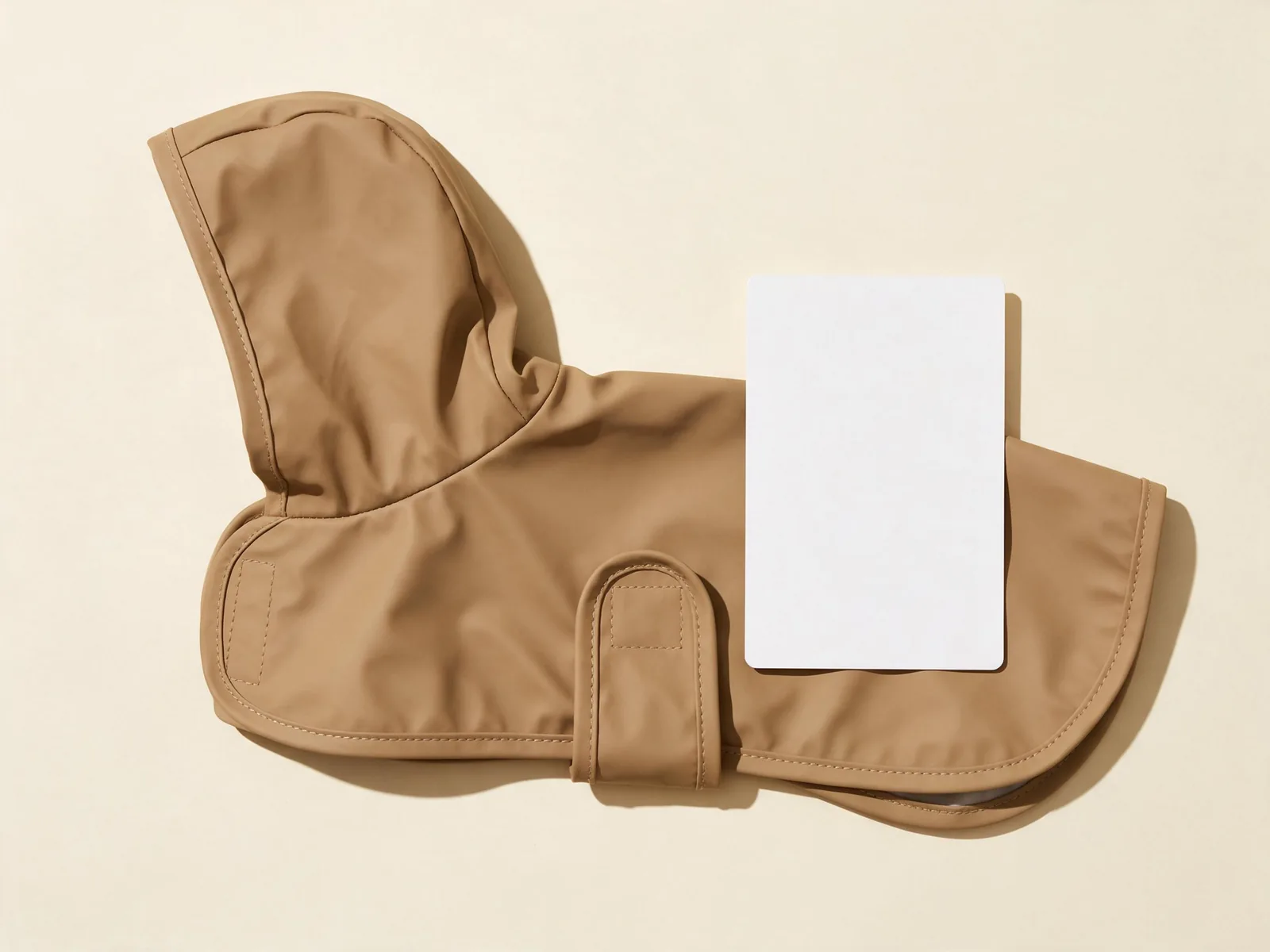
Start with the parts of the dog the design is meant to cover. Look at the back, chest and underside, the position of the hood if present, and any gaps around the neck or leg openings. Check how the garment opens, closes and works with the harness or leash arrangement you expect customers to use.
Ask whether seams are treated, what closure construction is used, and whether the design has been assessed as a finished garment. A long coat and a short cape offer different coverage; neither shape by itself proves water protection. Request front, side and underside views of the exact style and a sample if available. Confirm what the sample represents before treating it as proof of a production specification.
For a starting reference, the catalog lists MP-RN-003 rain suits with character hoods and leg coverage. Review each pictured option and confirm current availability, fabric, construction and performance for the selected style.
Explore dog jackets and rainwear as starting references, and confirm each style’s construction and performance.
For four-leg references, review the MP-CR-001 Corgi rain suit and the MP-CR-002 yellow and turquoise raincoat. MP-CR-001 includes a supplied measurement chart. Request the separate chart and fastening views for MP-CR-002, then check sleeve position, coverage and leash access for the style you select.
Compare fit and movement for each style
A useful size chart says whether each number describes the dog or the garment, where it is measured and what units are used. Compare the selected style’s chart with the dog’s chest, back and neck rather than assuming that one size label transfers between different styles. Our dog clothing measuring guide explains the measurement points; the American Kennel Club also describes measuring for gear.
When trying a sample, observe whether the dog can walk, turn and sit comfortably, and whether the garment or closure shifts or rubs. A hood, leg opening or underside panel may suit one animal but not another. If you are buying for a range of customers, ask which body measurements the chart is intended to cover and how the supplier handles unclear fit points.
Questions to send your supplier
- Which exact style, size, color and fabric does the description refer to?
- What is the material composition, and what are the care instructions for this item?
- Is there a water-penetration test report? What method, units, result, sample and test conditions does it cover?
- Are seams, closures and the finished garment included in any test or only the material?
- Which areas are covered, and can you provide a view of the underside and fastening?
- Does the chart describe body or garment measurements, and how were they taken?
- What sample, packaging, documentation and project terms can be confirmed for this order?
No particular test, rating, construction or delivery term is implied for Mew & Paw styles. For a larger project, combine these points with the pet apparel customization brief, including your intended market and the style reference.
How to compare two quotes fairly
Put the same intended use, requested sizes and documentation questions beside each option. Separate confirmed attributes from requests still under discussion. One supplier might provide a fabric result but no whole-garment evaluation; another may provide photos and dimensions but no test data. Record that distinction instead of treating an attractive label as equivalent evidence.
Ask Mew & Paw about custom pet apparel with the catalog style, expected use, size range and information you need confirmed. Product details and project options are assessed for the specific inquiry.
Frequently asked questions
Is water-resistant always unsuitable for rain?
The label alone does not tell you how the finished garment behaves in a particular shower. Ask for the seller’s stated conditions and evidence for the specific style.
Does a fabric water-column result prove the entire coat is waterproof?
No. It describes the material tested under the stated method and conditions. Seams, closures, openings and coverage require separate information about the finished garment.
Is a raincoat automatically the same as an insulated coat?
No. A rainwear style and an insulated style describe different features. Ask for the actual construction, coverage and intended use rather than assuming the product combines them.