Pet apparel · GUIDE
How to Measure Your Dog for Clothes: Chest, Back and Neck
Start with three measurements: the chest around its widest point, the back from the base of the neck to the base of the tail, and the neck around its base. Record the numbers and units, then check the size chart for the specific garment you are considering.
A size label is a starting point, not a universal description of a dog's shape. One dog's chest may match one row while their back length points to another. The useful next step is to understand what the chart measures and ask how that particular style is intended to fit.
This guide is for dog owners comparing clothing and for pet brands or retailers preparing size information for a collection. The American Kennel Club's measuring guide is a helpful reference for the three basic measurements and explains why sizing can vary between products.
In this guide
Prepare for a calm measurement
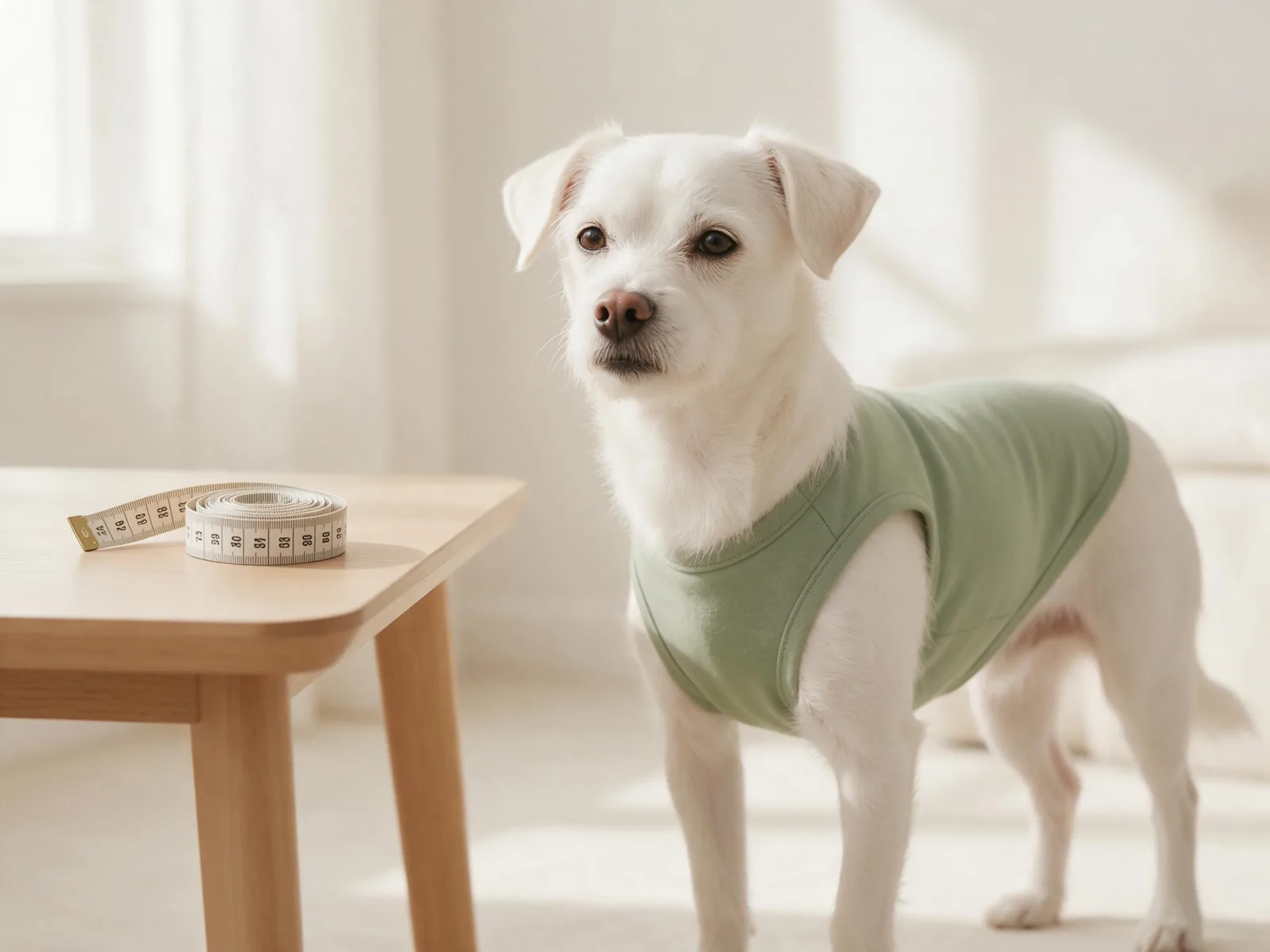
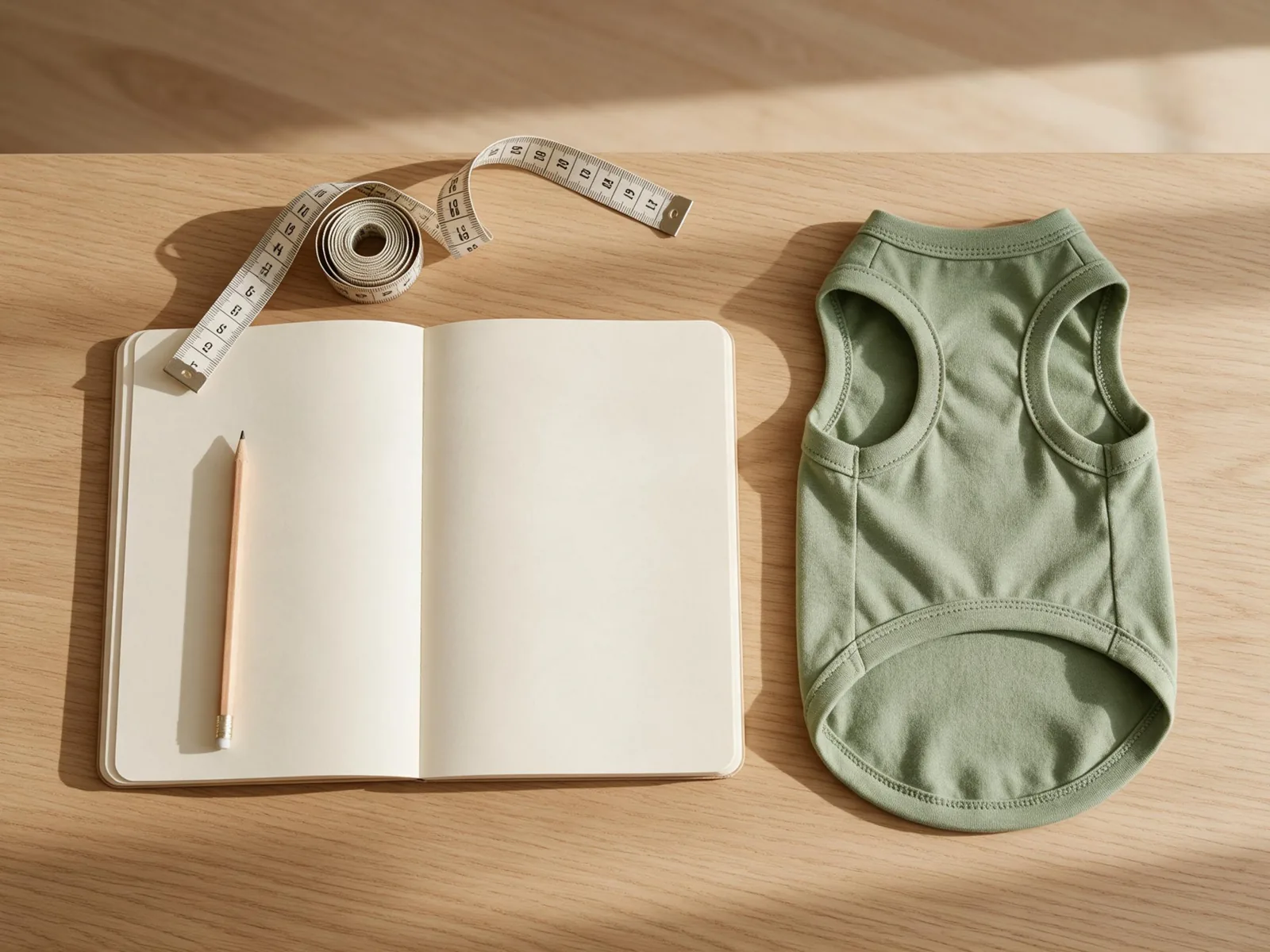
Use a flexible tape measure and take the measurements while your dog is standing naturally. If you do not have a soft tape, use a non-stretch piece of string, mark the length and lay it against a ruler. Ask someone to help keep your dog relaxed if that makes the process easier.
Keep the tape flat against the coat without pulling it tight or compressing thick fur. Record what you measured, where you measured it and whether the reading is in centimeters or inches. Take a second reading if your dog moved or the tape slipped.
For a sizing chart, follow the measurement method supplied with that style. Some charts include room for comfort in their recommended body-size ranges; others describe the garment itself. Knowing which kind you have matters before you add any allowance.
Measure your dog's chest girth
Wrap the tape around the widest part of the chest, usually just behind the front legs. Check that the tape is not twisted and follows the body all the way around. Note the reading as chest girth, rather than confusing it with a flat width measured across a laid-out garment.
Chest fit can be especially important for a pullover, dress or other style that passes around the rib cage. But it is not the only measurement: a suitable chest value does not automatically establish the right neck opening, leg openings or back length.
Measure the back length
With your dog standing, measure along the top of the back from where the neck meets the shoulders to the base of the tail. Record the length to the tail's base, not along the tail itself. The AKC describes this neck-to-tail-base method in its dog gear measurement guide.
That body measurement helps you compare lengths; it does not mean every garment should cover the entire back. A short dress, a vest and a longer coat may be designed to end at different points. Check the style's intended coverage and the placement of openings before choosing.
Measure neck girth
Measure around the base of the neck, near the point where a collar normally rests. Keep the tape level and comfortable, with no pulling or pressure. Note whether a high collar, a narrower opening or a fastening changes the way the chosen garment goes on.
The AKC discusses a two-finger comfort check for circumferences. Treat that as general fit guidance, not as a fixed number of centimeters to add to every recorded body measurement. Ask how the product's chart was measured and whether its stated range already accounts for wearing room. A garment should allow comfortable movement and should not constrict the neck or chest.
Read the chart before choosing a size
First identify whether the numbers describe the dog's body, the garment, or a recommended weight range. The same labels—such as “chest” and “back”—can be used for different kinds of measurement.
| What the chart describes | How to use it | What to confirm |
|---|---|---|
| Recommended dog body measurements | Compare your dog's recorded measurements with the stated body ranges. | Whether the chart already includes any allowance and where each measurement is taken. |
| Garment measurements | Compare the listed garment dimensions with your dog's measurements and the intended fit. | Whether the figure is a circumference or a flat width, how the garment is measured, and what wearing room is appropriate for the style. |
| Recommended pet weight | Use it as an initial guide alongside body measurements. | Chest, back and neck measurements for the particular size; weight alone does not describe body shape. |
If the description is unclear, request the measurement basis before placing an order. Do not add a generic number to every dimension or automatically choose a larger label: the construction, stretch, fastenings and intended coverage can change what fits. When your dog's measurements fall in different rows, share all three numbers and ask the supplier to help assess that style.
Convert inches and centimeters consistently
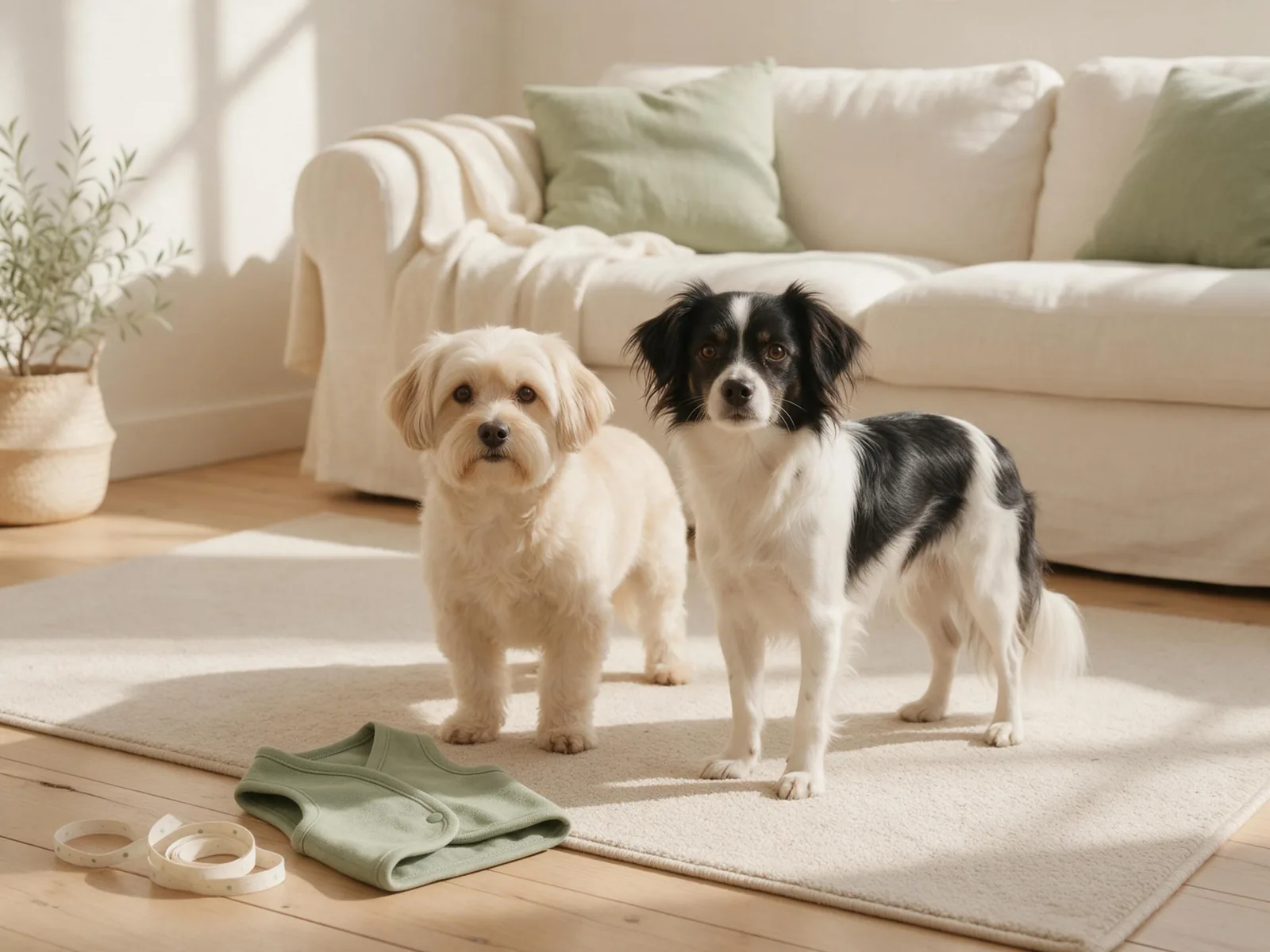
One inch equals exactly 2.54 centimeters. To convert inches to centimeters, multiply by 2.54; to convert centimeters to inches, divide by 2.54. The conversion factor is listed by the U.S. National Institute of Standards and Technology.
For example, a 40 cm chest measurement is approximately 15.75 inches, rounded to two decimal places. A 16-inch reading is 40.64 cm before rounding. Keep the original reading in your notes so rounding does not disguise a measurement close to a chart boundary. The conversion is exact; the measurement itself can still vary with how and where it was taken.
What a style-specific chart can—and cannot—tell you
A useful size chart belongs to a named garment and states what each measurement represents. The Mew & Paw custom pet apparel page shows an SS26026 dress chart with chest, back and neck dimensions in centimeters, plus recommended pet weight in kilograms. The page also notes a 2–3 cm manual-measurement tolerance for that chart.
Those numbers are for that listed dress chart; they are not a size system for every vest, coat or supplier. Some other reference styles show recommended pet weight instead of detailed measurements. Before using any chart to choose a size, confirm whether its columns refer to the garment or the dog's body, and how the supplier measures them. Ask for clarification when the chart does not say.
For brands and retailers, the same distinction matters when you prepare a customer-facing guide. A table labeled “chest” is not complete enough if the buyer cannot tell whether to measure the dog around the rib cage or measure a garment laid flat. Show the unit and measurement basis alongside the numbers for each style.
A sizing brief for a pet apparel collection
Give the supplier the garment reference and the measurement questions together. This short brief helps keep sizing discussions specific:
Style or reference: The garment and variation you want to assess.
Intended dogs: The body shapes or size range your collection should serve.
Measured dimensions: Chest girth, back length and neck girth, with units and measurement positions.
Chart basis: Recommended dog measurements, garment measurements or weight guidance.
Garment details: Intended length, closure, stretch and areas where movement needs room.
Questions: Measurement method, tolerance, available size breakdown and whether a fit sample can be arranged.
Order plan: Desired size and color mix, quantity and destination for confirmation.
If you plan to offer several styles, ask for the chart for each one. A size label that works for a sleeveless vest should not be copied onto a dress or rain garment without reviewing its measurements and design. Confirm sample availability and order details for the chosen project before treating the size range as final.
For packaging and project details, see what to include in a pet apparel customization brief.
Frequently asked questions
What if my dog is between two sizes?
Check the individual chart's instructions and share all three body measurements with the supplier. The right choice depends on what the chart measures and how the garment is designed to sit. A label alone cannot resolve a chest measurement in one row and a back measurement in another.
Can I choose clothing by weight alone?
Weight can help narrow the search, but it does not replace chest, back and neck measurements. Dogs of similar weight can have different proportions. If only a weight guide is supplied, request the relevant dimensions and the method used to measure them.
How do I check the fit when the garment arrives?
Observe your dog while they stand and move in the garment. Check for rubbing, restrictive openings or loose sections that interfere with movement, and follow the style's supplied fitting instructions. Remove the garment if it appears uncomfortable; if you have concerns about discomfort or a medical condition, ask your veterinarian for advice.
Discuss your pet apparel project
Explore custom pet apparel for brands and retailers or browse the pet apparel catalog. Bring your style reference and sizing brief to the inquiry form so the relevant measurements, sample options and order details can be discussed for your project.
Continue planning: compare dog coat styles and check raincoat claims.
See our dog clothes rubbing fit check for practical steps when clothing appears to cause discomfort.