Pet apparel · GUIDE
Dog Clothes Rubbing? Check the Fit
If you notice dog clothes rubbing, stop using the garment. Check the dog and clothing separately. A dog coat rubbing behind the front legs is a reason to check its fit.
Look for the contact point around the neck, chest, shoulders and front-leg openings. A garment can shift when the dog walks or turns, even if it looks right while standing.
If the skin is broken, painful or swollen, contact a vet before trying the garment again. Do the same if the problem persists.
A dog clothes fit check is not a diagnosis. Irritation or scratching can have causes other than clothing. Do not assume a fabric or seam is responsible.
For a collection, record where and when the problem occurred. “Too small” alone is not enough detail.
In this guide
Start by removing the garment
Take the garment off gently if the dog seems uncomfortable. Do not force a fastener or pull fabric across irritated skin. Check the dog in good light and note anything unusual, such as redness, damaged skin, repeated licking or a change in movement. Contact a vet if you are concerned, especially when skin is broken or the dog appears painful.
The American Kennel Club's clothing guide recommends removing clothing if a dog becomes stressed. It also advises supervising a dog in clothing and not leaving it dressed while unattended or in a crate. Follow those steps even if you have not confirmed rubbing.
Find where the clothing contacts the dog
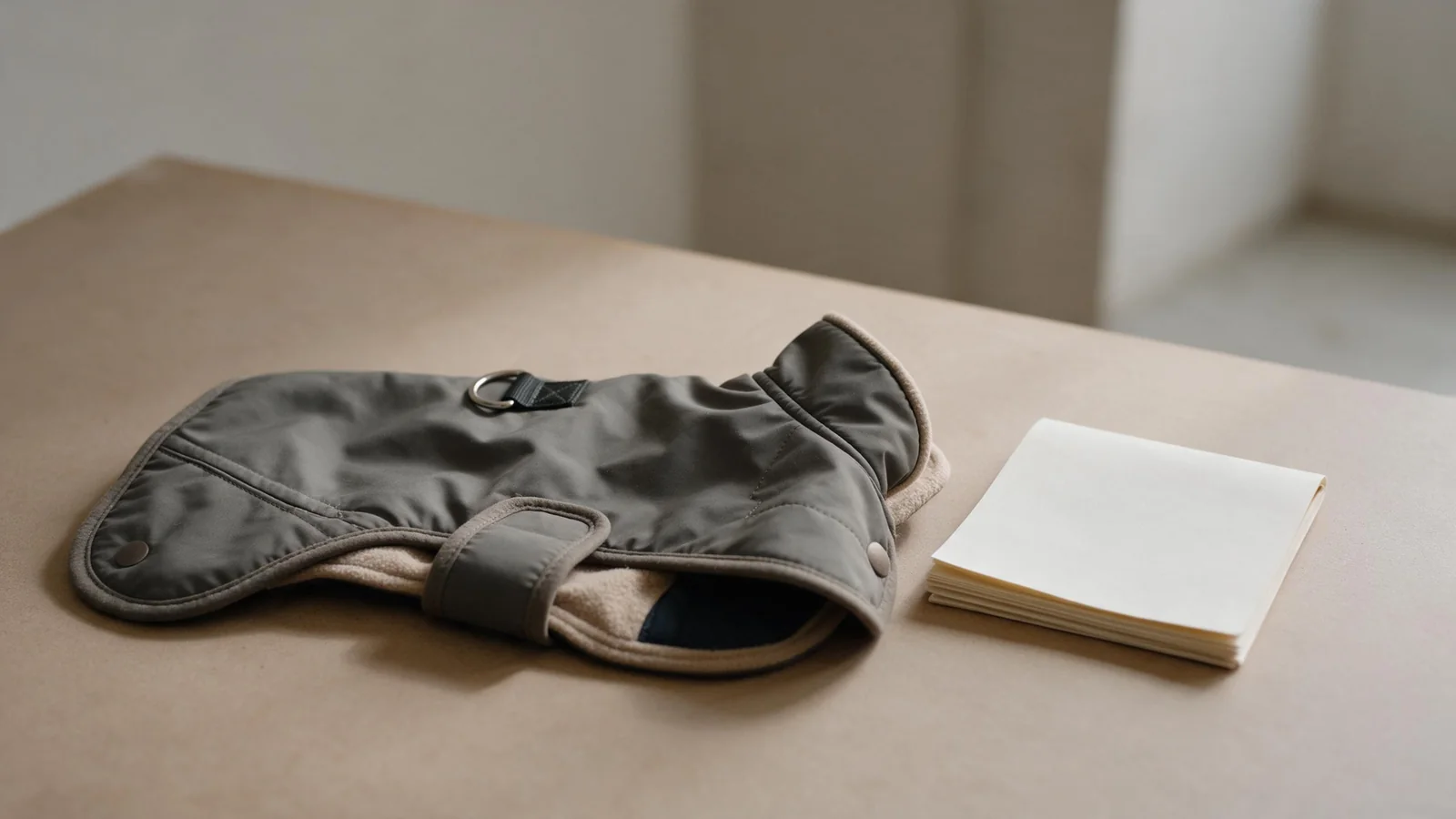
Lay the garment flat. Trace the edges that passed around the neck, behind the front legs and across the chest or belly. Look for folded binding, a twisted strap, a hard fastener, loose stitching or dirt. Check these points, but do not assume one caused the problem.
Compare the contact area with the location you observed on the dog. If the dog is comfortable and the skin is healthy, ask the supplier how the garment should sit. Consider another supervised fitting only after checking.
Do not put clothing back over sore or broken skin to recreate a problem. Ask your vet when it is appropriate to try again.
Check movement as well as standing fit
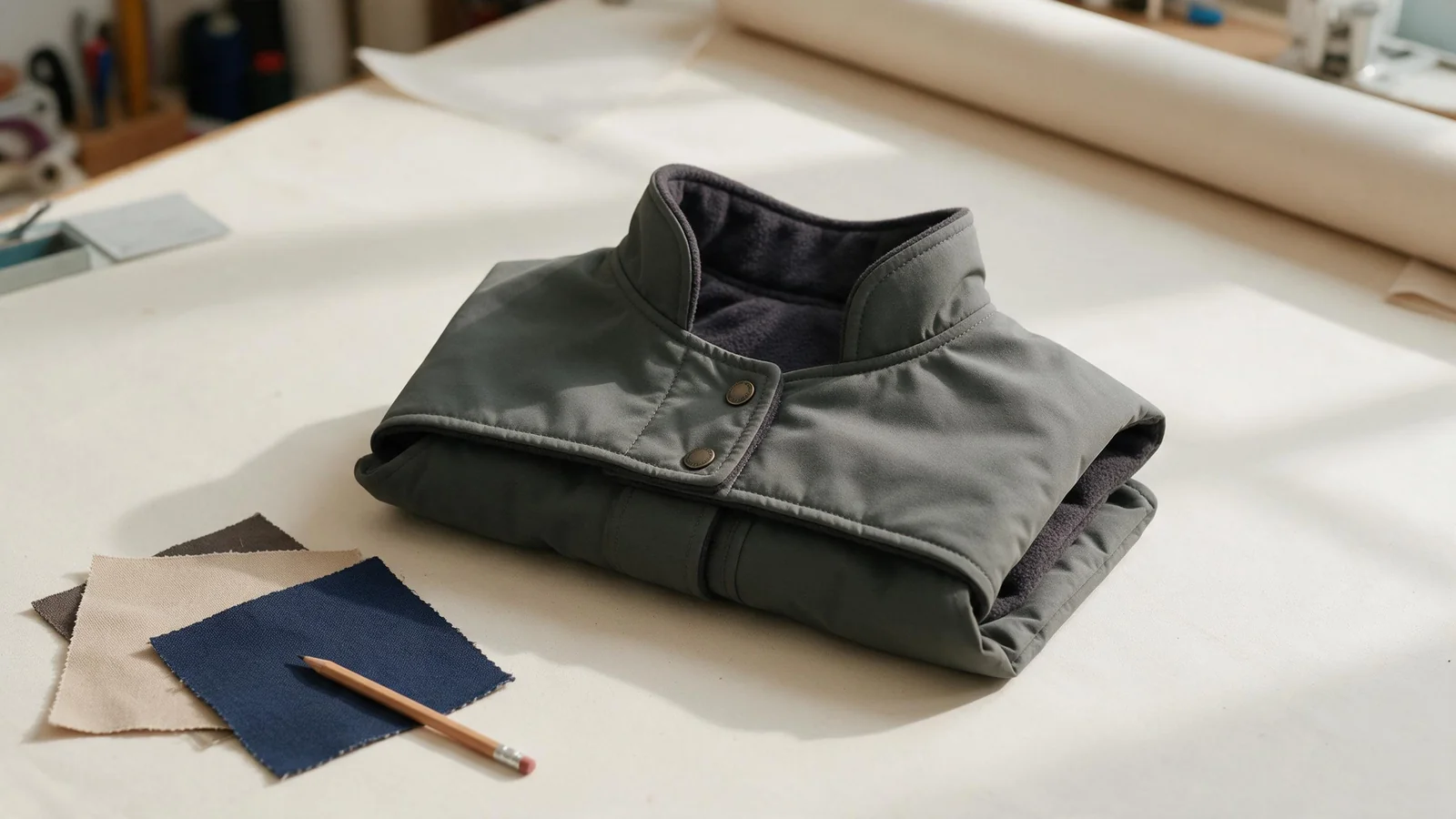
A useful fit check considers the whole garment. Look at the neckline, chest, shoulder area, leg openings and underside together. Check whether fabric pulls across the chest, bunches behind a leg or moves out of position. Do not tighten another strap merely to hide a shifting panel; changing one point can affect the rest of the fit.
If your dog is comfortable in the garment, watch them move calmly while you supervise. A short walk and a turn can show whether the garment shifts. Stop if the dog freezes, struggles or shows discomfort. The AKC notes that clothing that is too tight can restrict movement, while overly loose clothing can catch or cause a dog to trip.
For rainwear, check the actual coat with any harness or other layer intended for use. The AKC's raincoat guide suggests watching for restricted movement or discomfort. A harness opening does not make a jacket a leash attachment. Confirm each item's intended use.
Compare measurements with the specific style
Measure the dog again while standing naturally, then compare the results with the chart for the exact garment. Chest girth, neck girth and back length are common starting points, but charts and measuring methods differ by product. The AKC measurement guide describes those three measurements and recommends checking the individual product's size chart.
Our dog clothing measurement guide shows how to take these measurements. If the chest fits but the leg opening rubs, changing the size alone may not solve the issue. Ask about the shape and placement of the opening, the adjustment range and the intended body proportions. A different style may be a better match.
Check the garment after use
After a comfortable, supervised fitting, take off the garment. Check the areas it covered. Look at the clothing too: has a seam folded, has a panel twisted, or has dirt collected on an edge? If the item is damp or dirty, follow its care instructions and allow it to dry before any later use.
Do not assume that an added pad, home alteration or a softer-looking fabric will fix the fit. Additional layers can change clearance, and material feel alone does not establish how the complete garment behaves. Talk to the supplier about changes. Contact a vet about skin changes or ongoing discomfort.
Give a supplier feedback they can act on
For a pet apparel sample, keep the garment reference, size, measurements and sample version together. With permission, share photos of the relevant garment area. Describe the issue without presenting a diagnosis. Record:
- Which edge or panel appeared to make contact.
- Whether the garment shifted, bunched or pulled while the dog moved.
- The measured chest, neck and back length, with units and measuring method.
- Any harness or layer worn with the sample.
- What you want the supplier to review in the next sample.
Ask whether the opening, panel position or adjustment can be assessed for the specific style and size. Availability and garment changes depend on the project.
Use the sample review checklist to organize your notes. The dog clothing tech pack guide can help too. Discuss a collection through custom pet apparel.
Frequently asked questions
Does rubbing mean the garment is too tight?
Not necessarily. A shifted panel, an unsuitable opening, a fastener or a layer underneath may also be worth checking. Skin irritation can have unrelated causes. Remove the garment and ask a vet about concerning or persistent changes.
Can I add padding to an opening?
Ask the garment supplier before changing it. Extra material changes how the opening fits and may affect movement or cleaning. Do not put a modified garment over sore skin without veterinary guidance.
Should a dog wear clothes while alone?
The AKC advises supervision when dogs wear clothing and says not to leave clothes on a crated or unattended dog. Consider whether the garment is needed and follow advice suited to the individual dog.