Pet portrait rugs · GUIDE
Can You Put Two Pets on One Custom Portrait Rug?
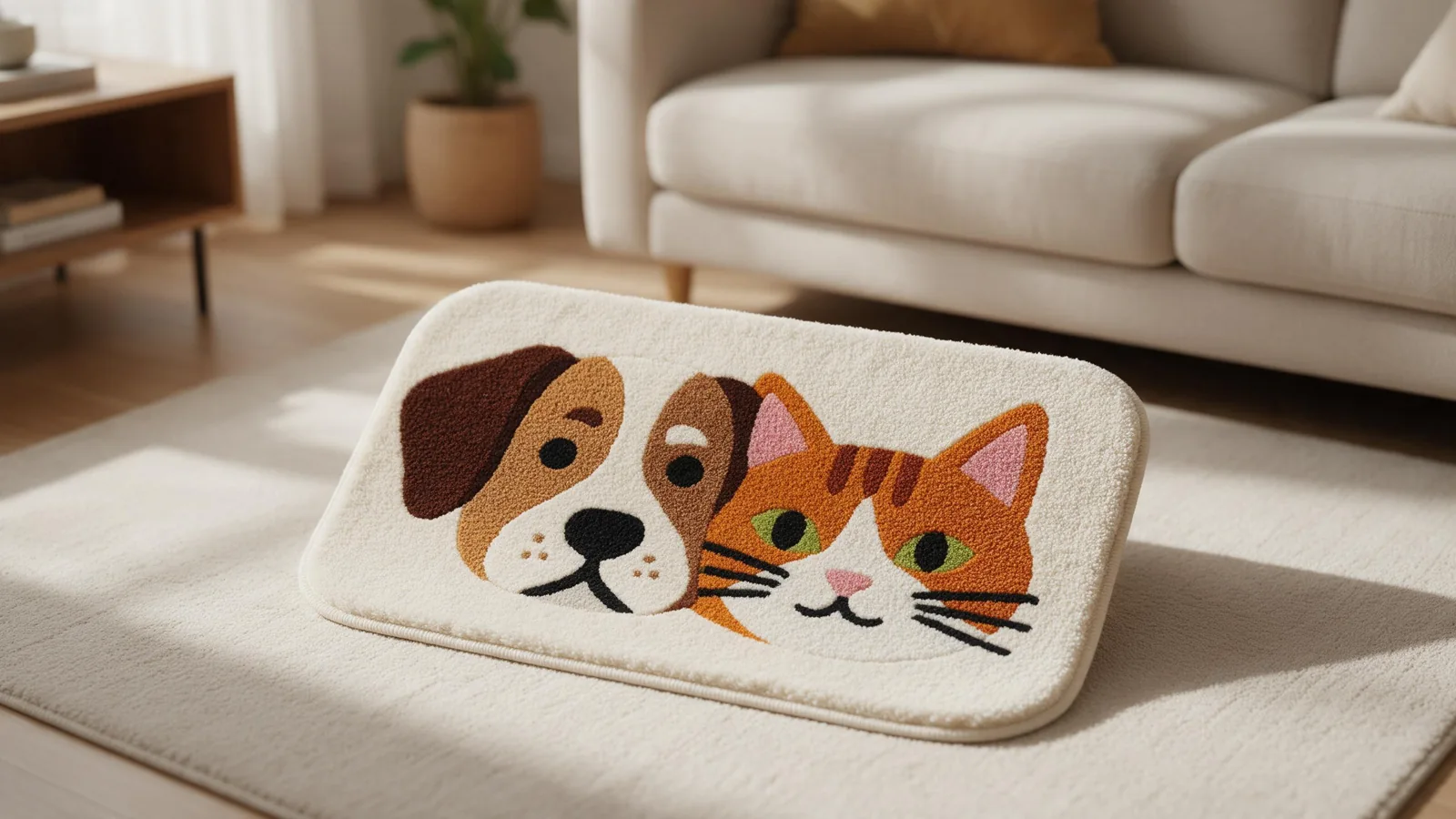
You can ask for two pets to share one portrait rug, even if your favorite photos were taken separately. Before ordering, send the supplier one clear reference for each pet and ask whether they can combine the images in the layout and size you want. The answer depends on the photographs and the proposed design.
A useful request describes more than the number of pets. It tells the artist who is who, which features matter, how the portraits should sit together and how much space you have. This guide helps you prepare those details for a custom pet rug inquiry.
In this guide
Choose a clear reference for each pet
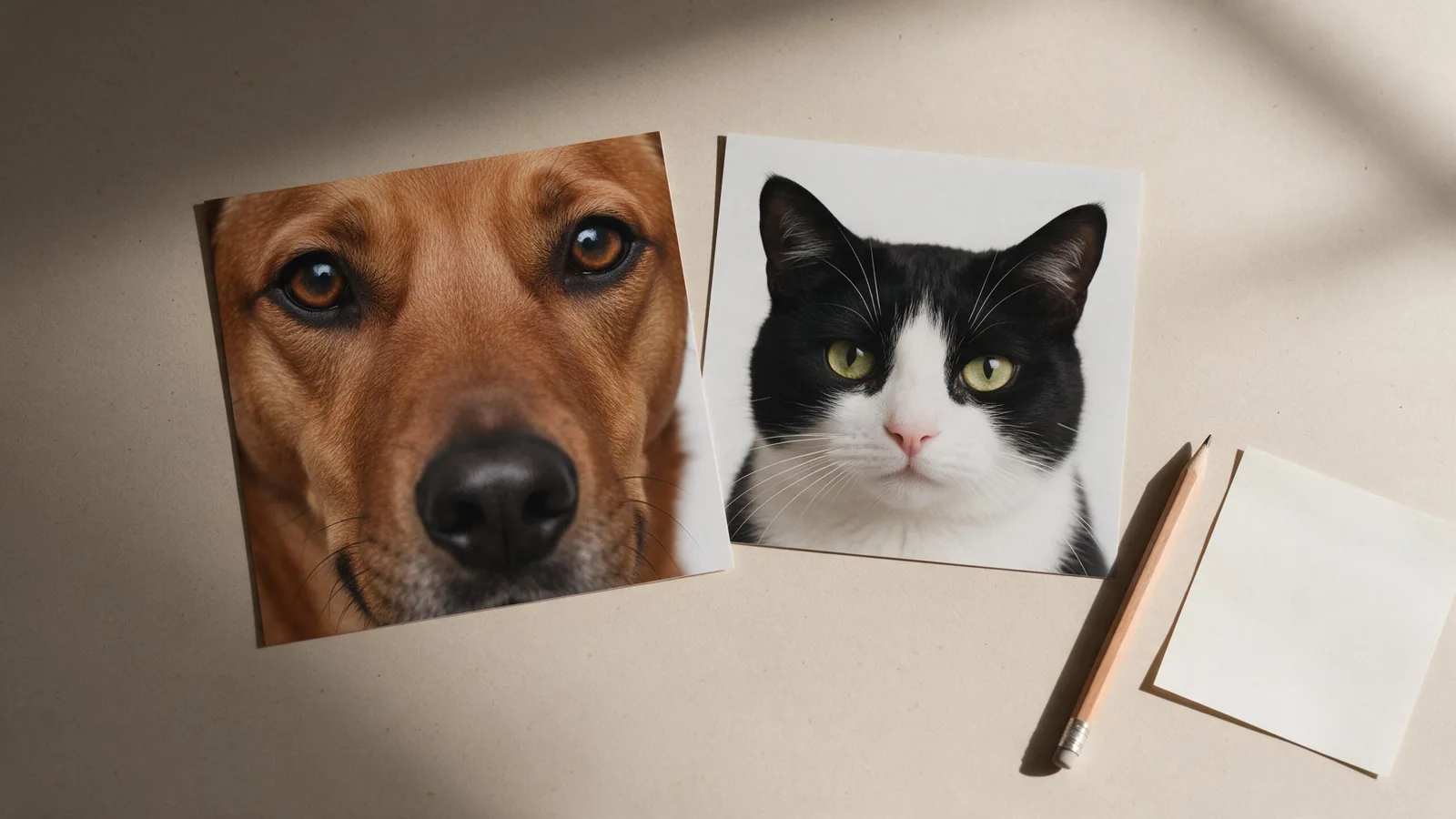
Start with the best original photo of each animal rather than a distant group shot. Look for an unobstructed face, visible markings and enough detail around the eyes, ears and muzzle. Similar viewpoints can make it easier to discuss a balanced composition, but do not discard a meaningful older photo simply because the angles differ. Send it and ask the supplier what can be represented accurately.
If you take new photos, Canon’s pet photography guide suggests soft window light or outdoor shade and focusing on the nearest eye. Keep the session comfortable for the pet.
Label each file with the pet's name and identify your preferred main reference. If one picture shows the face clearly and another shows a distinctive patch, explain which detail you want taken from each. The pet photo guide has more help choosing a reference.
Avoid relying on a heavily cropped screenshot when you have the original. If the only photo available is blurred, dark or partly blocked, explain that up front. Ask which details the artist can see and which would need clarification; a design should not invent a marking you care about.
Decide how the two portraits should relate
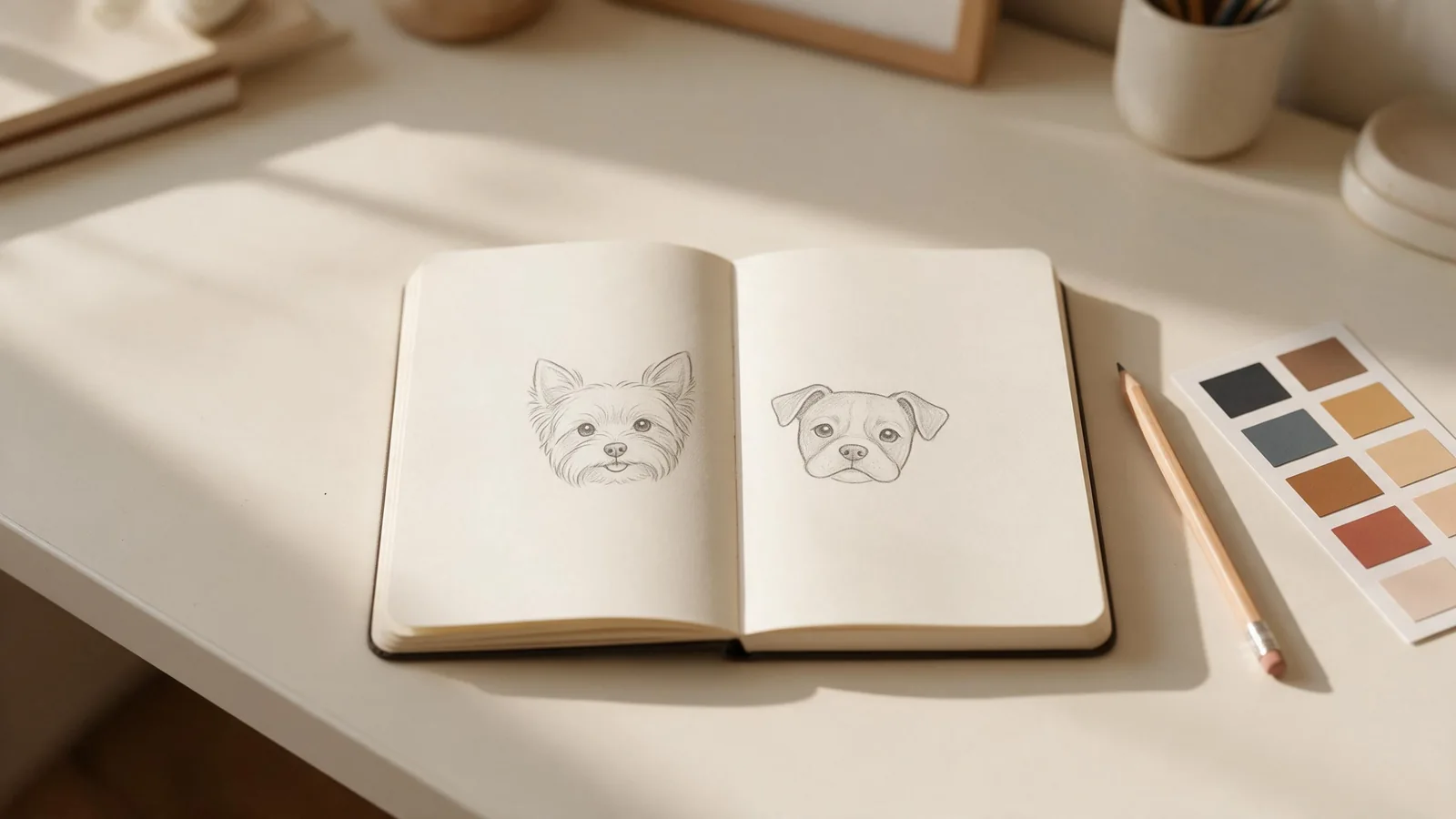
Choose the arrangement before discussing a final outline. Side-by-side faces can give each pet a similar visual role; a slightly overlapping composition may fit a different shape. Neither is automatically right. Think about which face should appear on the left, whether the pets should face forward or toward each other, and whether one may overlap the other.
Relative scale is a separate decision from real-life size. A large dog and a small cat can be drawn with similarly sized faces, or their relative proportions can reflect their actual sizes. Tell the supplier your preference rather than assuming a photo taken close to the camera shows the scale you want.
For each pet, list the features that must remain recognizable: for example, an asymmetric ear, a white chest patch or a distinctive eye color. If names are part of the idea, provide the exact spelling and ask whether lettering is suitable for the proposed design. Confirm available options with the supplier.
Match the shape and size to your space
Measure the intended floor area and consider how the two faces will sit inside the outline. A wider composition may need a different shape from a single centered portrait. Leave room for nearby furniture and doors, and discuss the intended use when requesting the specification.
Mew & Paw offers longest-edge reference sizes of 60, 80, 100 and 120 cm, with 100 cm as the recommended starting point; you can also ask about a custom size. The final shape and dimensions depend on the artwork and the order. A longest-edge measurement alone does not tell you the width of every custom outline. Use the rug size guide to prepare the space measurements.
Review both pets before approving a design
Ask to review the proposed artwork and dimensions as part of your inquiry. Check each pet separately, then look at the pair together. Compare the face shape and markings with the labeled references, check left and right placement, and look for cropped ears or an unintended overlap. If the design has names, check every character.
A screen proof helps you discuss the composition; it does not by itself establish how every color or detail will appear on the finished surface. Ask how the proposed outline and dimensions will be confirmed and what changes can be requested before approval. Our design proof checklist provides a fuller review.
What should you include in the request?
Send a short, organized brief:
- One labeled original reference for each pet, plus any supporting detail photos.
- The order of the pets and any important markings or features.
- Your preferred relative scale and whether the faces should overlap.
- A desired outline and the maximum space available, with units.
- Your starting longest-edge size, or the custom dimensions you want to discuss.
- Any optional wording, spelled exactly, and questions about whether it is available.
- A request to confirm the proposed artwork, final size and order-specific details.
Share these details through the custom pet portrait rug page. If the combination is difficult to reproduce from the photos, ask what alternatives are possible before deciding.
Frequently asked questions
Do both pets need to appear in one photo?
Not necessarily. Separate references can be proposed, but ask the supplier to assess whether the available photos can be combined for your particular design.
Can a dog and a cat be shown together?
You can request a mixed-pet composition. Provide clear references for both animals and confirm the layout and available options for your order.
Is one large rug always better than two separate rugs?
Not always. A shared portrait keeps both pets in one composition; separate pieces let each have its own outline and placement. Compare the available space and ask about the options before deciding.
What if one pet has only an old photo?
Send the best original available and any additional images that show identifying features. Ask the supplier to assess the available detail instead of assuming it can be reconstructed accurately.
Planning a surprise? Read the custom pet rug gift guide.