Pet apparel · GUIDE
OEM, ODM and Private Label Pet Apparel: What Buyers Should Ask
Define who controls the design, pattern and branding before comparing quotes. Compare three common ways to develop a pet clothing collection and identify which decisions need agreement before sampling.
In this guide
Clarify the starting point
With an existing style, a buyer begins from a garment that already has a defined shape. A new design starts from a drawing, sample or specification and usually involves more decisions before a sample can be judged.
The labels OEM, ODM and private label are used differently by suppliers. Ask exactly which drawings, patterns and decoration files will be created or reused, rather than relying on the label alone.
IBM describes one common distinction: an OEM makes a product to the customer's design specifications, while an ODM designs and manufactures products that customers may sell under their own brands. Suppliers may use these terms differently, so confirm the actual scope and rights in writing.
IBM’s description of OEM and ODM is a general supply-chain example, not a fixed rule for pet apparel. In a first conversation, ask who provides the base pattern, who can change it and whether the supplier will make a sample to your brief.
Compare development responsibilities
Use the proposed work to compare suppliers. Record the starting files, the person responsible for each task and the approval you need before sampling.
| Starting point | What to put in the brief | What to confirm |
|---|---|---|
| Existing catalog garment | The reference and each requested label, fit, fabric or packing change | Available specifications, change feasibility and rights to use the existing design |
| Your drawing, sample or tech pack | Measurements, construction, artwork and the development work you want quoted | Responsibility for patterns and grading, development deliverables and sample approvals |
| A supplier-proposed design | The proposed garment, requested changes and intended sales market | Which assets can be used, permitted branding and any agreed exclusivity |
Put the confirmed scope into a dog clothing tech pack or written brief. A supplier’s use of an OEM or ODM label still needs to be matched to the work offered.
Set ownership and approvals
Ask who may use the design and whether an existing pattern remains available to other buyers. Put any exclusivity, artwork ownership and confidentiality terms in writing for the selected project.
List the decisions that require approval: sample size, fabric, colour, placement of branding and packaging. Changes after approval can affect the quote and schedule; ask how revisions are handled.
Separate rights in your supplied logo and artwork from rights in an existing supplier pattern or a new pattern made during development. WIPO recommends clarifying ownership, permitted use and confidentiality in supplier agreements. Discuss the terms for your project and seek legal advice where needed; a brand label alone does not establish exclusivity.
Compare complete proposals
Compare the same garment specifications, size mix, branding and packing across proposals. A lower garment figure is difficult to assess if it excludes development, samples or services included elsewhere.
Ask for the project-specific minimum, sample cost, production timing and trade terms. Mew & Paw discusses options for the selected style; garment changes need confirmation.
Build a comparison brief
Give each supplier the same starting information.
- Identify the existing reference, supplied sample or original drawing that starts the project.
- List exactly which label, fabric, size, colour or construction changes you want discussed.
- Ask who owns or may reuse the artwork and patterns, and what confidentiality terms can be agreed.
- Request separate confirmation of development, sample, order and packing costs.
- Record the approvals needed and ask when the agreed specification becomes final.
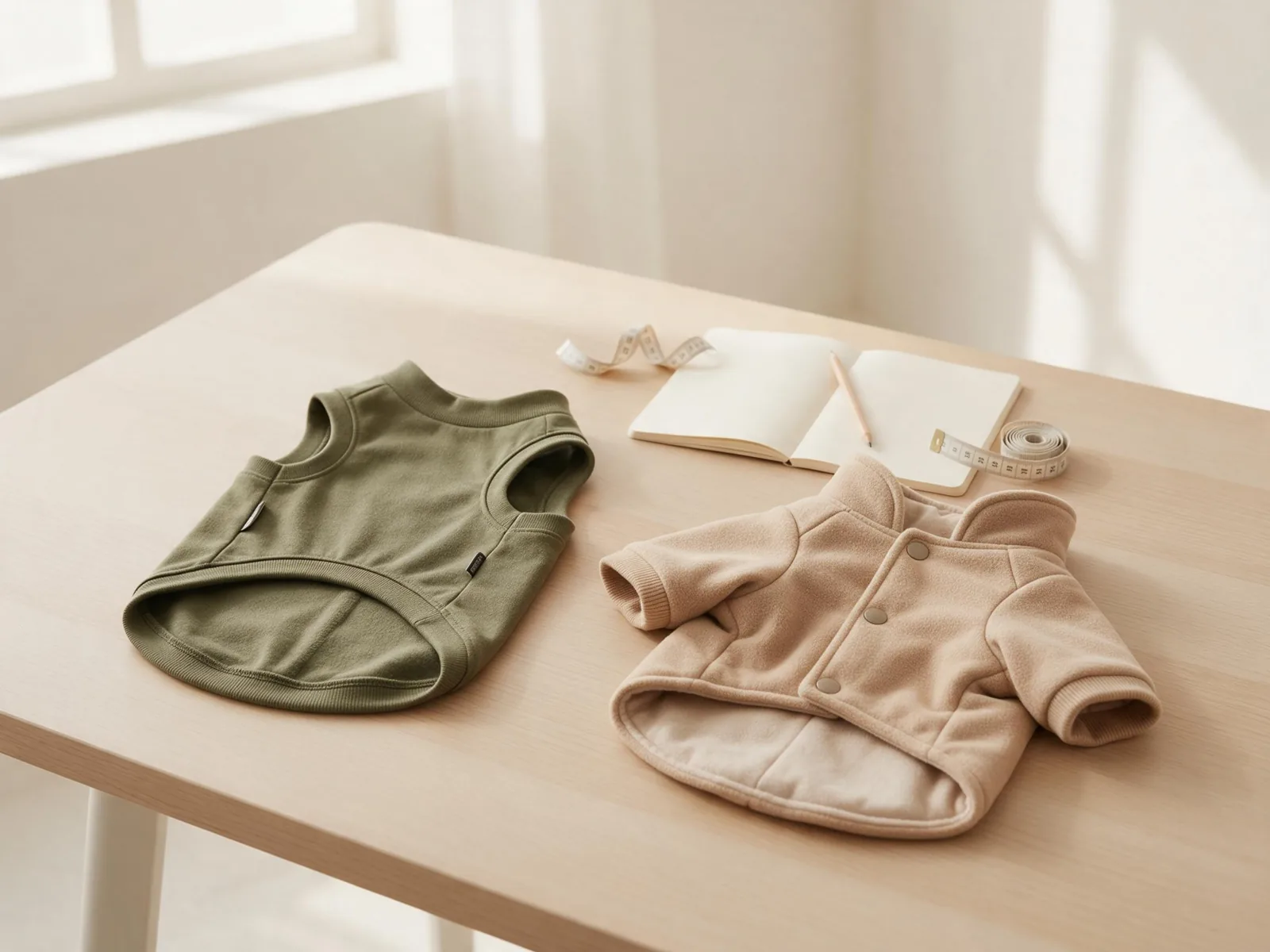
For an existing reference, include the product code in the brief. The MP-LG-003 padded coat and MP-SD-001 fleece-style vest have different coverage and attachment details to review. Ask for each style’s measurements and clarify the intended use of its D-ring when preparing the sample review checklist.
Use the Mew & Paw OEM project page to bring the starting reference, garment changes and sample questions together. Available work and project terms are checked with the selected supplier.
Questions buyers ask
Does private label always include an exclusive design?
No. A private-label order may use an existing garment. Discuss design ownership and exclusivity for the particular style.
What should I send first?
Share a reference or sketch, intended wearer, target sizes, quantity, destination and the branding or packaging changes you want to discuss.
Sources and further reading
Sources are cited for the limited topics described below. Supplier capabilities and product-specific claims still require confirmation.
- WIPO: IP agreements with suppliers: Supplier agreements on design ownership, use and confidentiality; this source does not define OEM or ODM.
- IBM: OEM and ODM models: One general distinction between OEM production to customer specifications and ODM products designed by the manufacturer; exact duties and rights depend on the agreement.