Pet portrait rugs · GUIDE
How to Keep a Pet Portrait Rug From Slipping
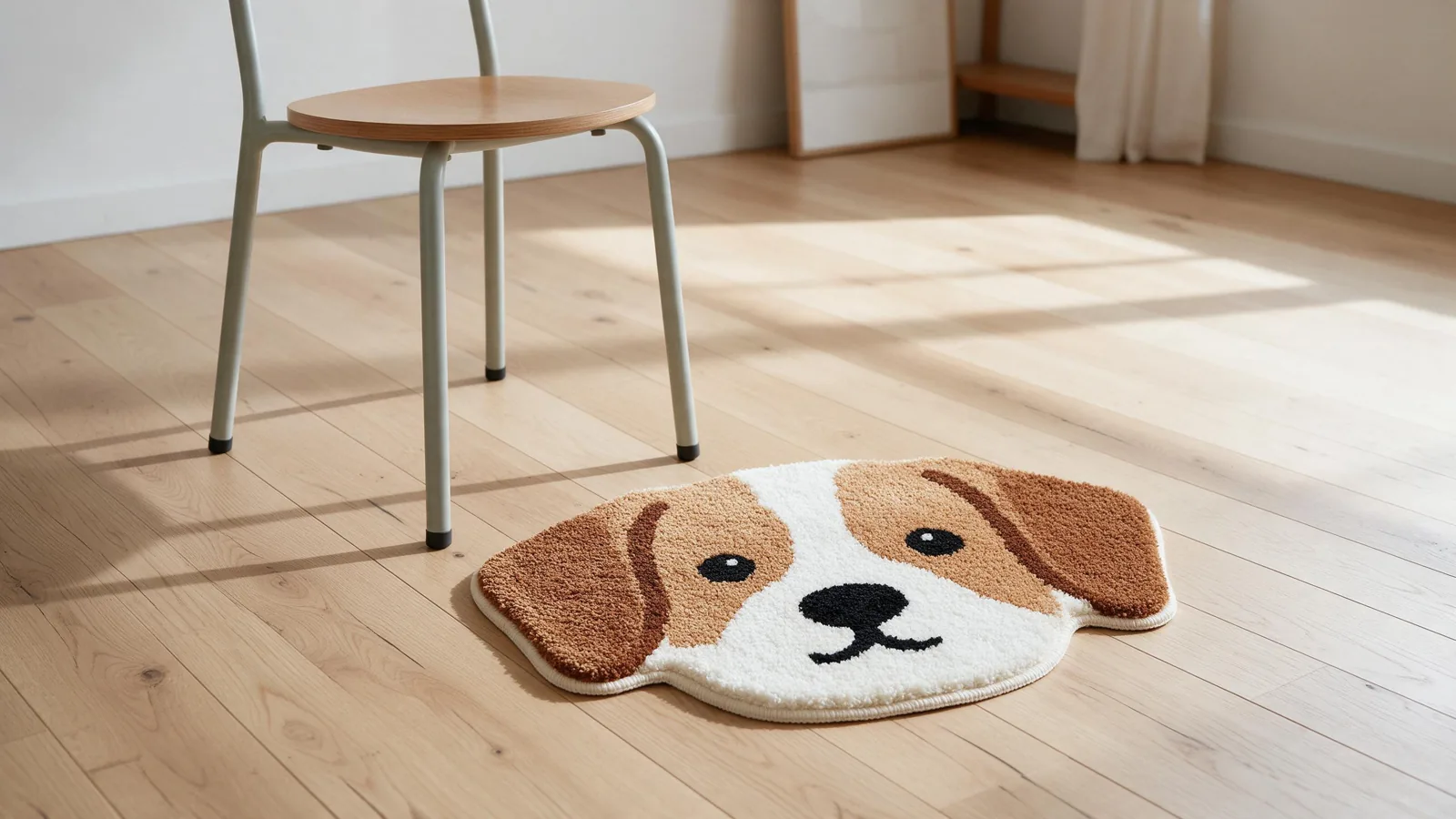
To learn how to keep a rug from slipping, start with its position, floor and backing. A small pet portrait rug can move on a smooth floor, so check its edges before putting it in a walking area.
A non-slip rug pad may help. First, check that it suits both the floor finish and the rug's backing. If the rug still shifts, curls or creates an obstacle, move it out of the walkway or remove it. No pad or tape can guarantee that a rug will never move.
The right choice depends on the actual rug, the floor and who uses the room. Ask about the backing when planning a custom pet portrait rug, and follow the care and flooring instructions for the items you receive.
In this guide
How to stop rugs from sliding: start with placement
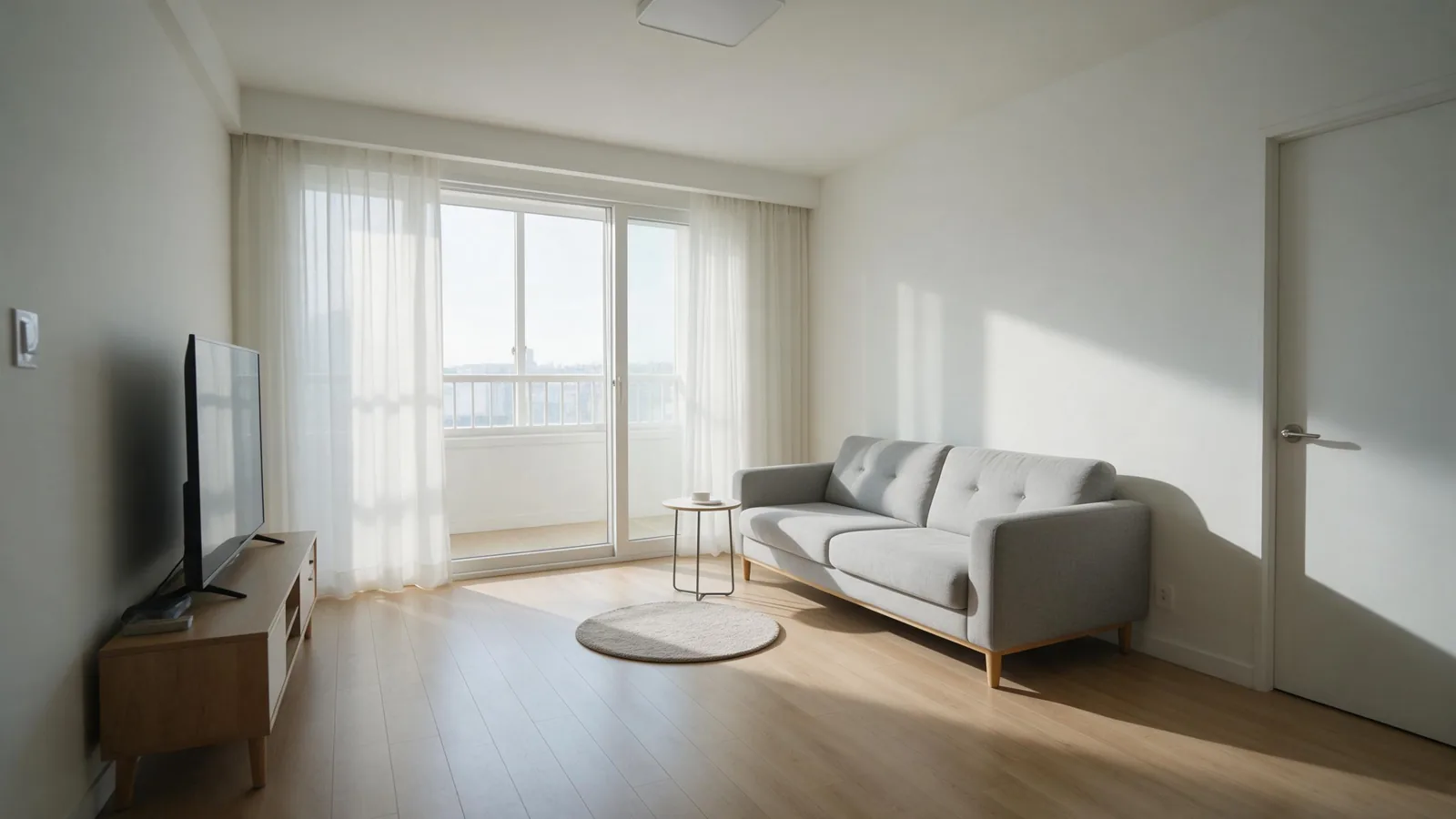
Choose a position where the rug can lie flat and people can see its edges. Keep it away from stairs, door swing paths and narrow routes where someone has to step over it. Pets, wheeled chairs and foot traffic can move a lightweight rug. Watch how people and pets use the space.
The CDC's home fall prevention checklist advises older adults to remove throw rugs or use double-sided tape or a non-slip backing to help stop slipping. Its advice is about home hazards; it does not certify any specific rug or floor treatment. If a person in the household is at risk of falling, removing the rug from their route may be the most appropriate choice.
Choose a rug pad for hardwood floors carefully
Turn the rug over and identify its backing and any attached label. Identify the floor surface, such as finished wood, tile, vinyl or laminate. Find the floor maker's care instructions if you can.
Ask the pad maker whether its product is compatible with the specific floor finish and rug backing. If either manufacturer cannot confirm compatibility, do not assume the combination is safe for the finish.
Clean and dry the surfaces according to their own instructions. Avoid placing a rug over a damp floor. If the rug or backing has its own care requirements, follow those instead of applying a general cleaning rule. Our pet portrait rug care guide lists questions to ask about the particular item.
Fit a separate pad to the rug's shape
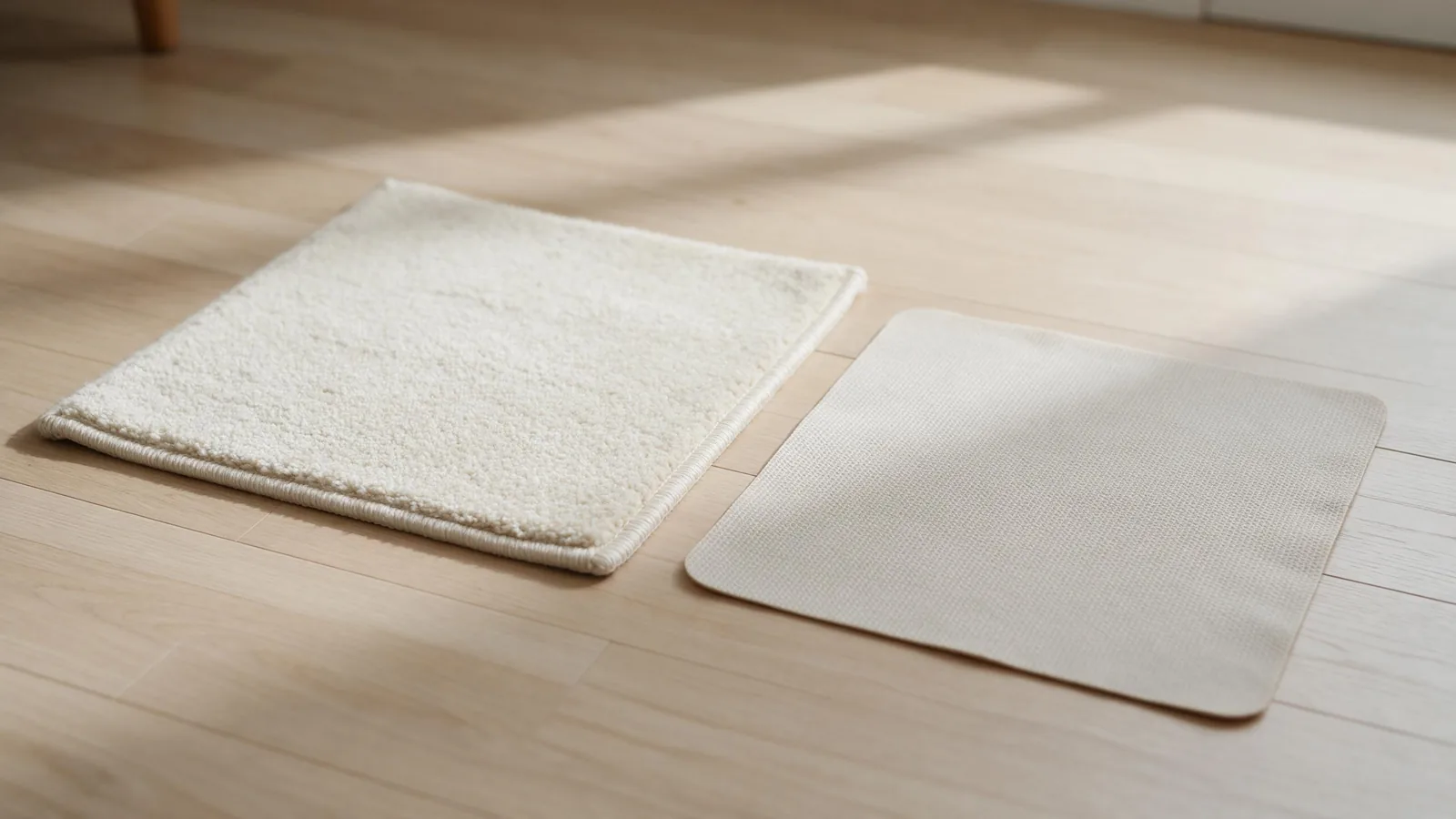
For an irregular portrait outline, compare the pad with the narrow and curved parts of the rug. If the pad maker allows trimming, cut the pad to sit beneath the rug. Leave enough support for its shape.
Follow the pad's directions rather than using a universal trimming measurement. Never cut the portrait rug itself to make a pad fit.
Lay both items flat and check that the rug edges do not lift or bunch. A pad that shows beyond the outline, folds underneath or shifts with the rug needs adjustment or replacement. Use a clear, open space while checking and do not ask a pet or person to run across the rug as a test.
Treat tape and adhesives as separate decisions
The CDC lists double-sided tape as one option. First, check that the tape suits both the floor finish and rug backing. Check the manufacturer's instructions for application, removal and any residue.
If both makers allow it, try a small hidden area first. This cannot guarantee that the finish will remain unaffected over time.
Avoid putting household glue, caulk or an unknown coating directly on a custom portrait rug. These changes can alter the rug backing or floor finish. They may not be suitable for your items.
Ask the rug and floor suppliers before using an adhesive treatment. Do not infer that a backing is non-slip simply from its texture or appearance.
Recheck after cleaning or rearranging
Lift the rug and pad from time to time as allowed by their instructions. Look for moisture, residue, dust, lifted edges and movement. Follow the makers' instructions when cleaning or reinstalling.
Recheck after washing the rug, changing the pad, moving furniture or replacing the floor. If the combination slips or the edges will not stay flat, remove it from the area until the issue is resolved.
If the planned space is too narrow for the rug and a clear route, revisit the size. Our rug size guide explains how to measure the available space. When sharing a project, ask for the proposed outline and dimensions as well as the longest edge.
Questions to ask before ordering
- What backing and care instructions apply to this exact rug?
- Can a separate pad be used with that backing, and are any treatments unsuitable?
- What are the proposed width and height of the portrait outline?
- Which pad products are approved for the actual floor and finish?
- Can the pad be trimmed, and how should it be cleaned and checked?
- If the rug is intended as a gift, does the recipient have a suitable clear location? See our pet rug gift planning guide.
Share your photo and intended placement through the custom pet rugs page. Final dimensions, backing and other specifications are confirmed for the individual order.
Frequently asked questions
Does every pet portrait rug need a separate pad?
Not necessarily. It depends on the actual backing, floor and location. Ask the rug and floor suppliers what is compatible, then check whether the rug lies flat and remains in place. Remove it if it creates a hazard.
Can I use rug tape on a wood floor?
Only after checking the tape and flooring manufacturers' instructions for the specific finish. Ask about removal and residue, and follow any permitted spot-test instructions. Compatibility cannot be assumed for every wood floor.
Can I put a portrait rug beside a bed?
First consider the walking route, lighting and the needs of everyone using the room. If an edge catches a foot or the rug shifts, move or remove it. Keep the walking route clear.