Pet apparel · GUIDE
Cotton and Polyester in Pet Clothing: A Buyer's Comparison
Compare the complete fabric and garment, not just the fibre name on a listing. Compare fibre information, fabric construction and care questions when choosing pet apparel materials.
In this guide
Read the composition
A label can identify the fibres or blends in a material, but it does not by itself specify the fabric's thickness, surface finish, stretch or construction. Ask whether composition describes the outer fabric, lining or both.
When the supplier provides percentages, retain them with the sample record and ask how any claimed composition was confirmed. Treat fibre terminology and legal label requirements as market-specific questions.
Compare the intended garment
Cotton-containing fabrics can be made into many different knits and woven constructions; polyester fabrics also vary widely. Compare actual swatches for hand feel, recovery, weight and how a garment is expected to be used.
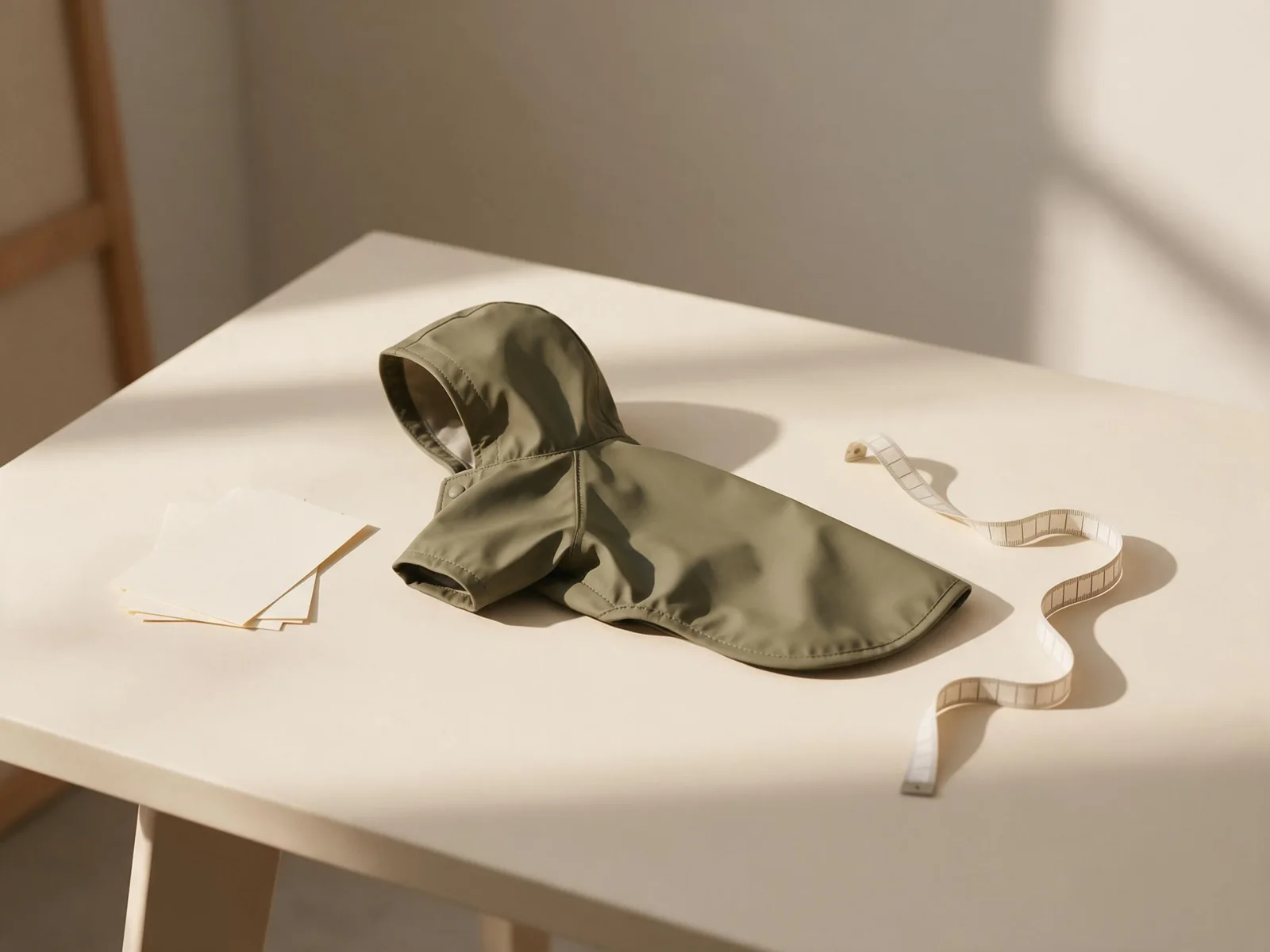
For a warm layer or a rain shell, inspect lining, closures and construction as well as fibre. A polyester listing alone is not evidence of a waterproof finished coat.
University of Georgia Extension lists cotton as a natural cellulosic fibre and polyester as a manufactured fibre. It also notes that polyester is often blended with other fibres. These general fibre descriptions do not replace a specification for the actual garment.
For context, University of Georgia Extension lists cotton as absorbent and notes that polyester may retain oily stains. Treat these as general fibre descriptions, not predictions for a blend, finish or particular pet garment; compare the proposed materials and care instructions.
Review care
Ask for care instructions that cover the fabric, decoration and trims together. If washing performance matters, agree how the sample will be assessed before confirming bulk specifications.
The US Federal Trade Commission publishes general guidance for textile labelling. Ask a qualified party whether a specific pet garment and destination fall under a particular rule rather than assuming the rule applies.
Write down the sample’s starting measurements and the agreed washing and drying method before any comparison. Afterward, compare the same points and note changes in print, trim and appearance. This records what happened to that sample; broader performance claims need suitable evidence.
Make a like-for-like fabric request
Ask for comparable swatches instead of comparing fibre labels in isolation.
- Request the proposed cotton-containing, polyester-containing or blended material for the same garment use.
- Record the fibre percentages and identify the outer fabric, lining and any separate trim.
- Compare fabric construction, approximate weight if supplied, stretch and surface feel.
- Ask how the finished garment and its decorations should be cleaned.
- Retain the swatch and specification that were actually approved for your order.
Questions buyers ask
Can a garment contain both fibres?
Yes. Blends are possible; ask for the actual composition and which garment component it describes.
Which fibre is better for every dog?
There is no universal choice. Compare construction, fit, care and the intended use using actual samples.
Sources and further reading
Sources are cited for the limited topics described below. Supplier capabilities and product-specific claims still require confirmation.
- US FTC: textile and wool labelling guidance: US textile fibre labelling guidance within its stated scope; it does not establish that every pet garment is covered.
- US FTC: care labelling for certain textile articles: General US guidance for covered textile wearing apparel and specified piece goods; whether it covers a particular pet item requires separate confirmation.
- University of Georgia Extension: textile fibre basics: General characteristics and care considerations for named textile fibres; not a performance claim for any individual garment.